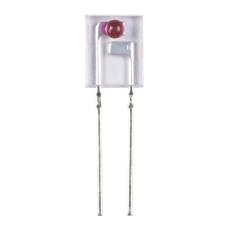
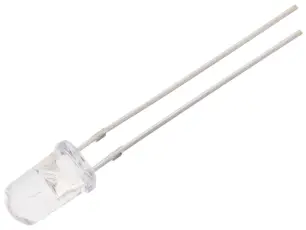
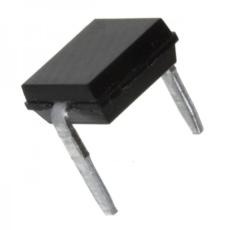
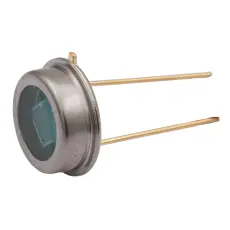
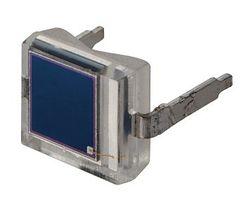
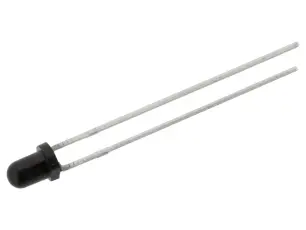
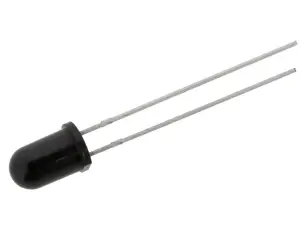
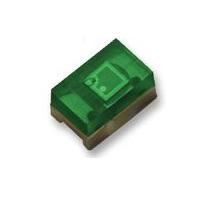
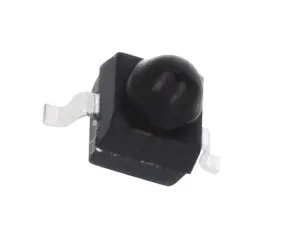
A photodiode is a light-sensitive semiconductor diode that converts incident light into an electrical signal. It functions as a light detector and is primarily characterized by its fast response and good linearity.
When light strikes the light-sensitive area of the photodiode, a small current is generated that is proportional to the amount of incident light. The output signal is normally significantly lower than that of a phototransistor and therefore often needs to be amplified using external electronics.
A photodiode is well suited for applications where light intensity needs to be measured or rapid changes in light need to be detected. Typical applications include light measurement, optical sensors, pulse detection, optical communication, and measuring instruments.
The main advantages are the fast response time and good linearity. The disadvantage is the relatively weak output signal compared with a phototransistor, which means that external amplification is required.

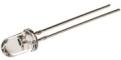

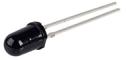

product listing
Observe:
Enter your e-mail address, to recieve a message when the item is in stock