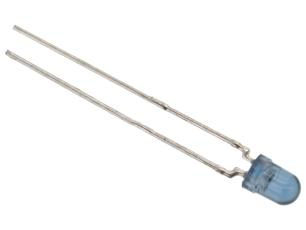
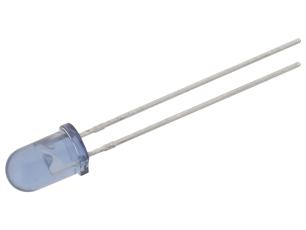
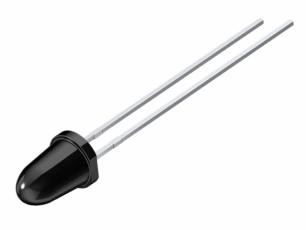
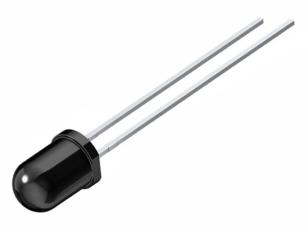
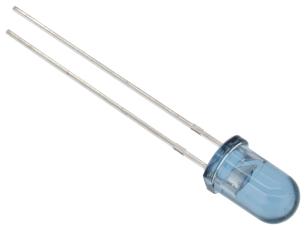
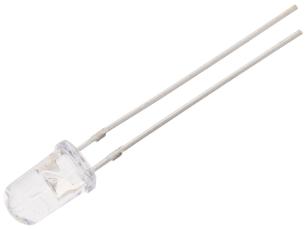
An IR LED (infrared light-emitting diode) is a semiconductor diode that converts electrical energy into infrared light. Unlike a conventional LED, it mainly emits light outside the visible spectrum, typically at wavelengths of around 850–950 nm.
When current flows through the IR LED, infrared light is emitted. The light intensity depends on the current through the LED, which is why it is normally used with a current-limiting resistor or another form of current regulation.
IR LEDs are used to transmit information or detect objects using infrared light. Typical applications include remote controls, reflective sensors, optocouplers, pulse sensors, and optical communication. A photodiode, phototransistor, or integrated IR receiver module can be used as the receiver.
The advantage of IR LEDs is that they provide a simple, fast, and contactless optical signal that is invisible or nearly invisible to the human eye.

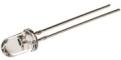

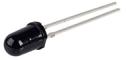

product listing
Observe:
Enter your e-mail address, to recieve a message when the item is in stock