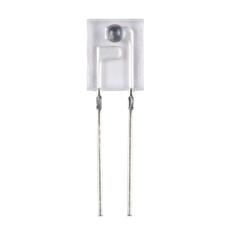
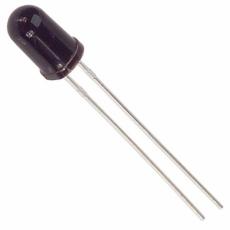
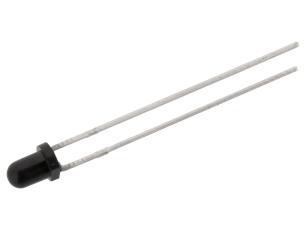
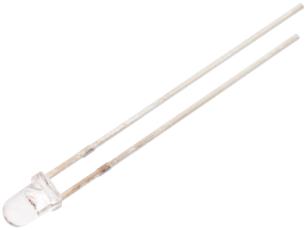
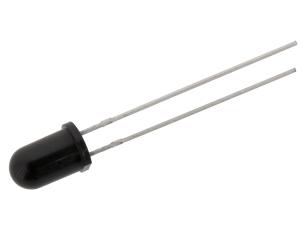
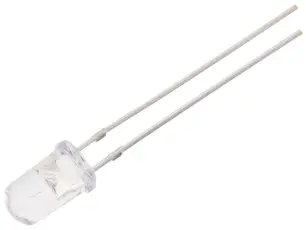
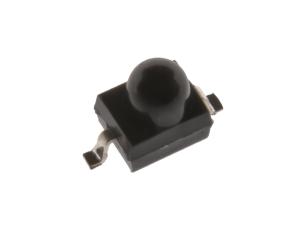
A phototransistor is a light-sensitive transistor in which incident light controls the transistor current. It therefore functions as a light detector, similar to a photodiode, but with internal current amplification.
When light strikes the light-sensitive area of the phototransistor, a small current is generated and amplified by the transistor. As a result, a phototransistor normally provides a significantly larger output signal than a photodiode and can therefore often be connected directly to simple downstream electronics.
A phototransistor is well suited for applications where the main purpose is to detect whether light is present or not, or whether an object has interrupted or reflected a light beam. Typical examples include light barriers, object detectors, simple pulse sensors, and reflective sensors.
The advantage is the relatively large output signal provided by the transistor amplification. The main disadvantage is that a phototransistor is slower and less linear than a photodiode.

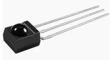
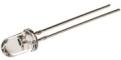

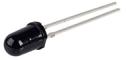

product listing
Observe:
Enter your e-mail address, to recieve a message when the item is in stock