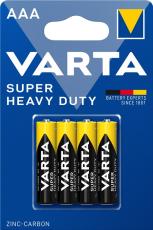
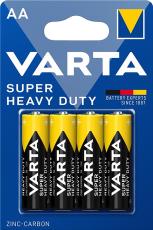
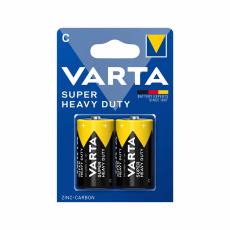
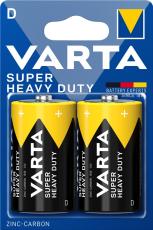
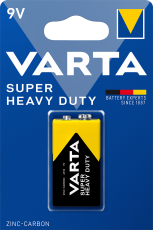
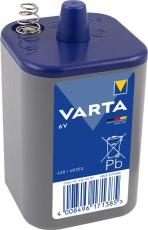
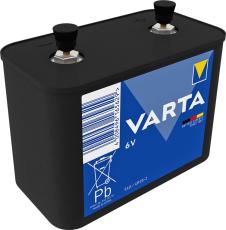
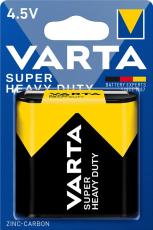
A Zinc-chloride batteriy is an improved version of the classic Zinc carbon battery.
Features compared to previous Zinc carbon batteries:
- Higher capacity: Zinc chloride batteries have a higher capacity than Zinc carbon batteries, which means they can deliver more energy.
- Better discharge curve: Zinc-chloride batteries have a better discharge curve, which means they can maintain a more stable voltage during use.
- Reduced risk of leakage: Zinc chloride batteries dry out while in use, reducing the risk of leakage compared to classic Zinc carbon batteries.
- Better low-temperature performance: Zinc chloride batteries are more cold-resistant than Zinc carbon batteries.
- Longer shelf life: Zinc chloride batteries generally have a longer shelf life than Zinc carbon batteries, making them suitable for devices used less frequently.
The anode (positive pole) of the classic Zinc carbon battery is made of zinc and the cathode (negative pole) of manganese dioxide (Zinc carbon) is mixed with graphite powder that surrounds a carbon rod. Its electrolyte is a solution of ammonium chloride (ammonia, NH4Cl) and zinc chloride (ZnCl2). The improved version of the brownstone battery has higher purity in the cathode. The electrolyte is zinc chloride (ZnCl2), which reduces the risk of leakage by drying out the battery as it is consumed. Zinc-chloride batteries, also known as motor batteries, are marketed as Zinc-Carbon, often as "Extra Heavy Duty". Zinc-chloride batteries can handle higher current draw than before and perform better at low temperatures. Despite being sold as an affordable alternative, they are increasingly replaced by alkaline batteries, largely due to their lower capacity.



product listing
Observe:
Enter your e-mail address, to recieve a message when the item is in stock