


Product description
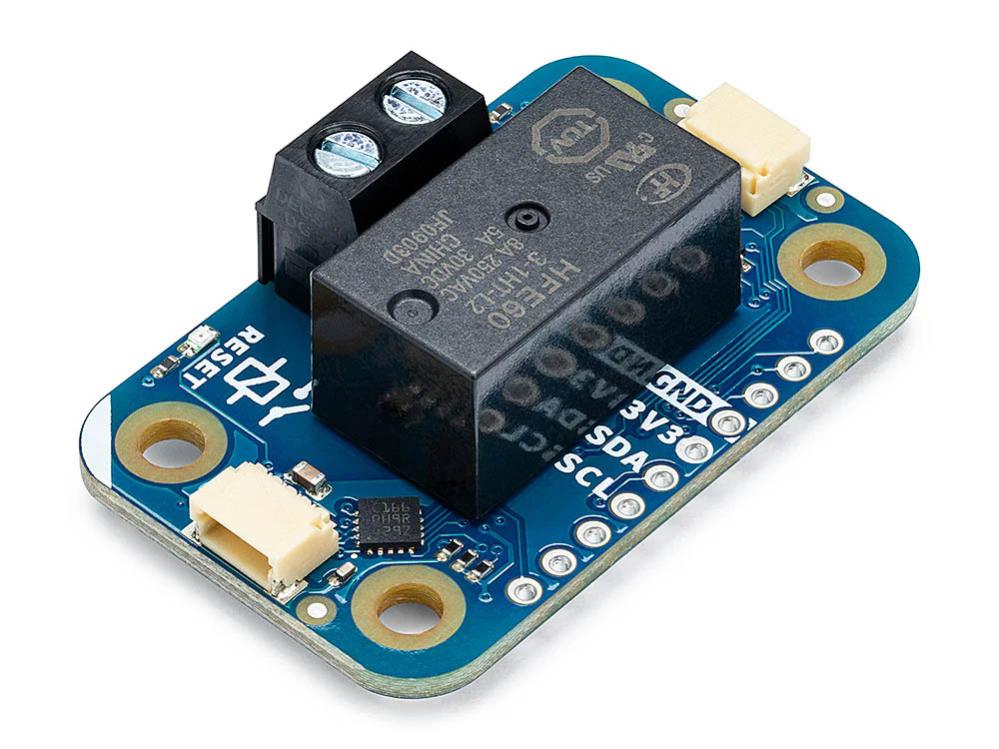
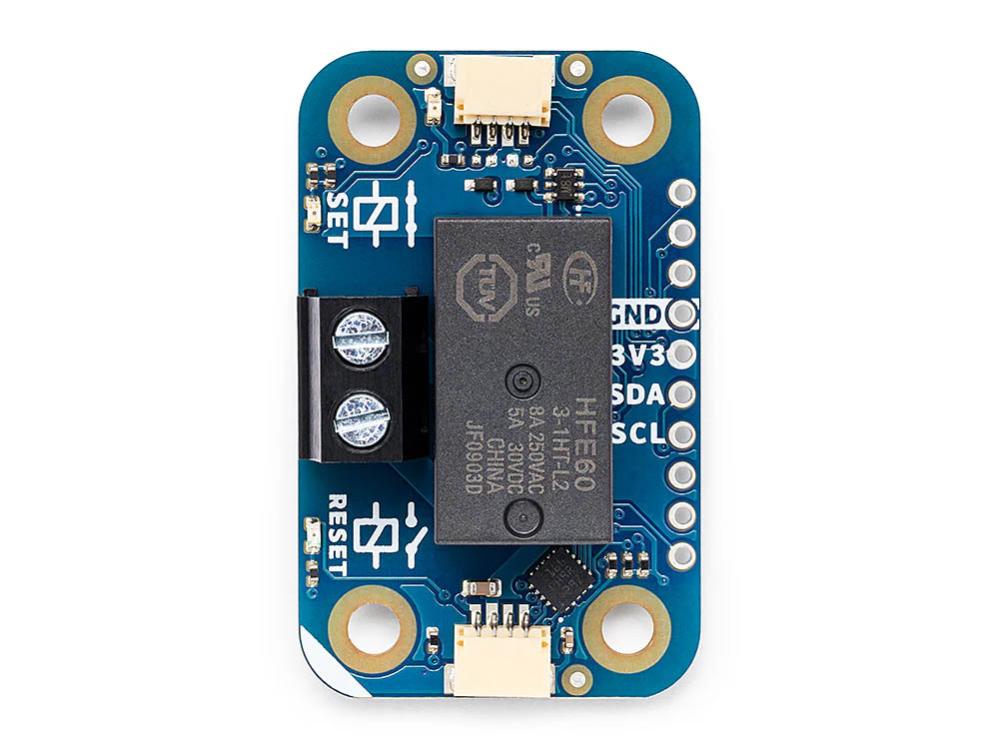
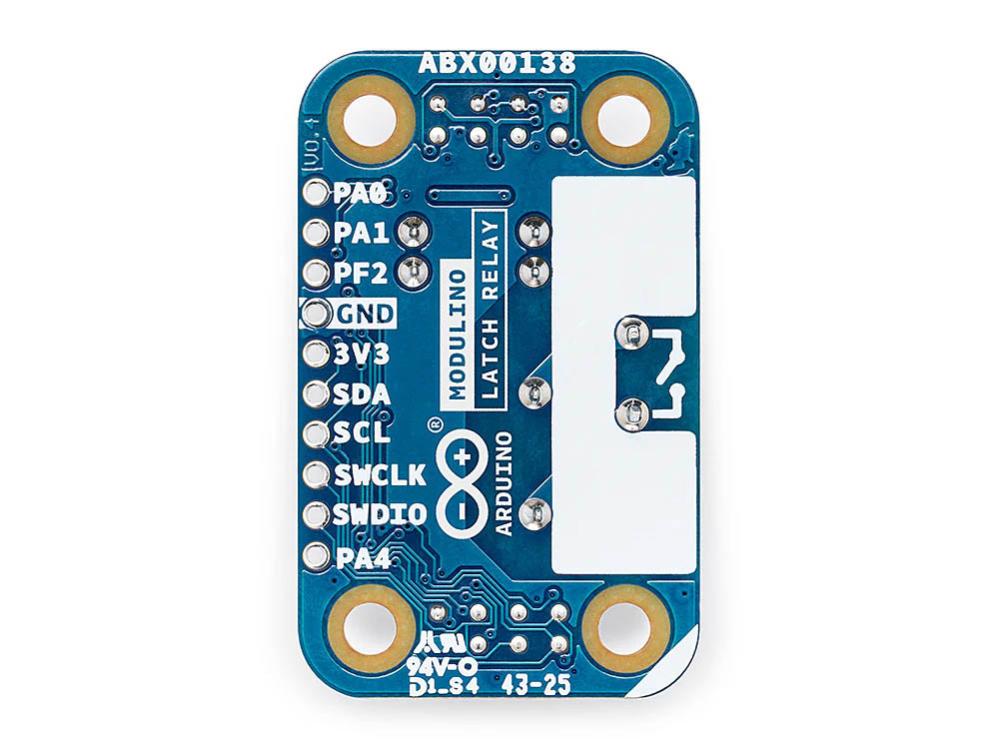
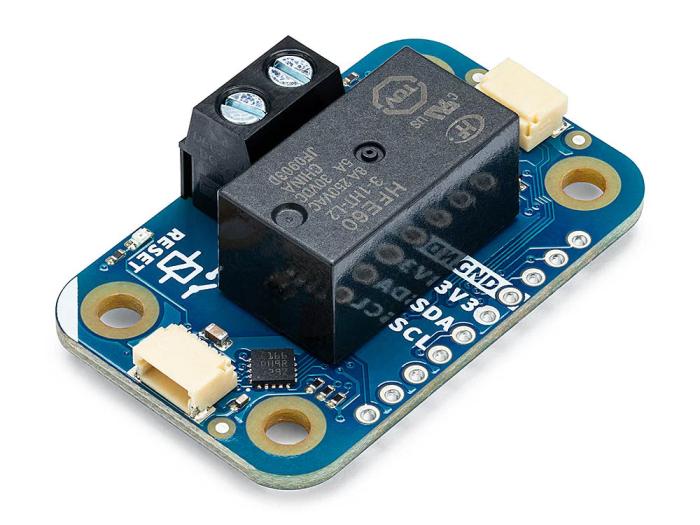
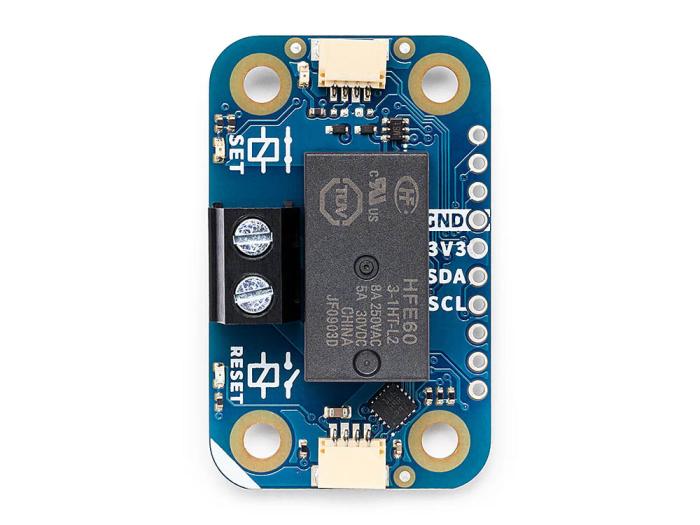
Arduino Modulino Latch Relay is a compact plug-and-play QWIIC module that enables safe and efficient control of external loads in electronics projects, suitable for automation, energy management, and control systems. The module is part of the Arduino Modulino family with QWIIC-connected nodes that can be easily connected to compatible microcontroller boards via I²C, simplifying system integration without complex wiring or soldering.
Modulino Latch Relay uses a bistable latching relay that maintains its state (open or closed) even when drive voltage is removed, making the module suitable for applications where stable load control is required across power outages or restarts. Relay control is handled digitally via the I²C interface and QWIIC connector, which facilitates daisy chaining with other Modulino nodes within the same system.
The module is designed for operation at 3.3 V via the QWIIC connection and can be used to switch DC loads up to levels defined by the relay specifications, commonly in automation and energy-saving projects where external load control is required. Official libraries and examples are available for the Arduino environment, simplifying programming and integration in both prototypes and near-production solutions.
Modulino Latch Relay is useful in systems where reliable control of components such as motors, pumps, lighting, or other DC-driven loads is required, and where maintaining the relay state after power loss is valuable. The relay is TÜV-approved for AC loads (250 VAC / 8 A); however, Arduino has chosen to CE-mark the product for DC use only (30 VDC / 5 A).
The Arduino Modulino series comprises a range of plug-and-play modules that can easily be connected to, for example, Arduino Uno R4 WIFI or other microcontrollers with Qwiic support. With the Arduino Nano Carrier (41024622), the entire Arduino Nano family gains convenient access to Qwiic.
What is Qwiic? It is a standard with pre-wired cables and connectors that use the I²C bus. There are several connector standards for I²C, but Qwiic is the most common and widely adopted. Examples of manufacturers that use Qwiic include SparkFun, Arduino, Adafruit, and Electrokit.
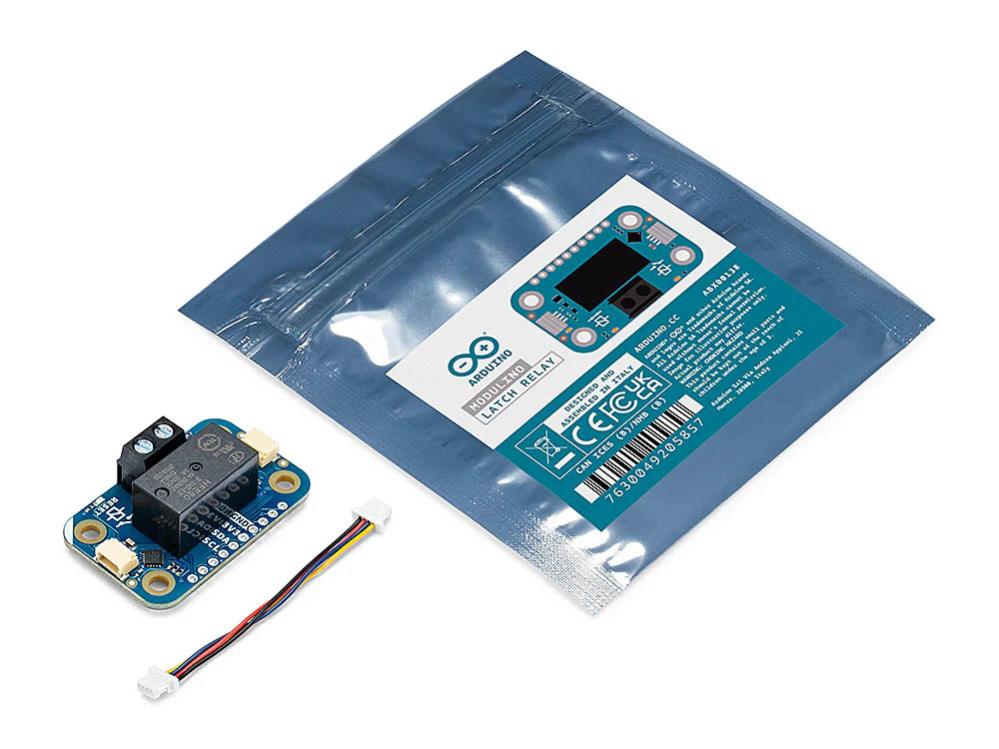
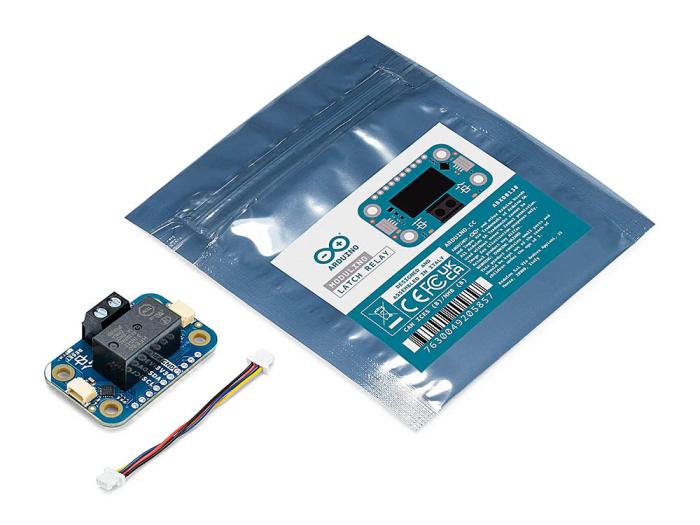
What makes Qwiic simple is that connection is done using a ready-made 4-wire cable (a Qwiic cable is included with all Modulino modules). The Modulino modules have two Qwiic connector ports, making it easy to connect them in a chain one after another (daisy chain). This is practical when using multiple modules in the same project. There is no need for a breadboard or loose jumper wires.
Qwiic is particularly well suited for educational purposes, where the focus is on programming sensors and control, and where breadboards and jumper wires are introduced at a later stage.
It is entirely possible to combine Qwiic modules from different manufacturers. The simplicity of using Qwiic is evident.
About Arduino Modulinos:
- Ready-made example code
- Both beginners and experienced developers can implement advanced functions using preconfigured templates for Arduino Cloud and the dedicated Modulino library, which supports both Arduino C++ and MicroPython.
Modulino modules
- Plug-and-play connectivity: Quickly connect Modulino modules to Arduino UNO R4 WIFI or Nano boards using the Nano Connector Carrier for fast and reliable integration.
- Smooth expansion: Easily add new sensors, actuators, or control modules by chaining them together.
- Seamless integration into the Arduino ecosystem: Take advantage of Arduino software, cloud tools, and community support to simplify development.