
Product description
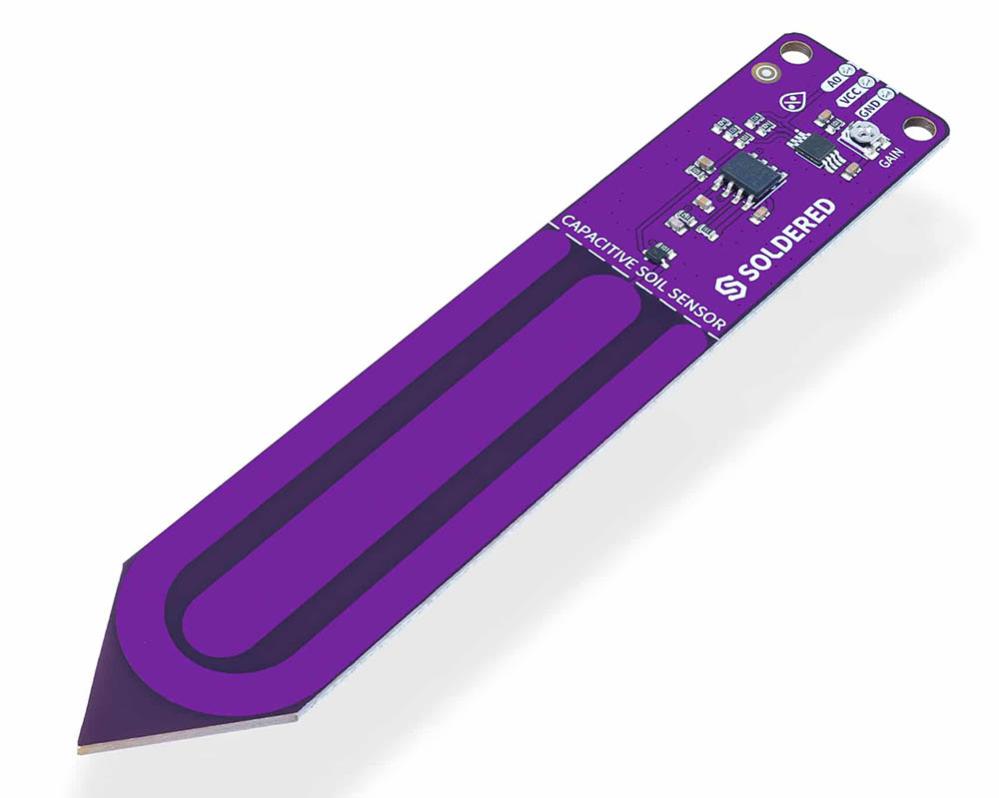
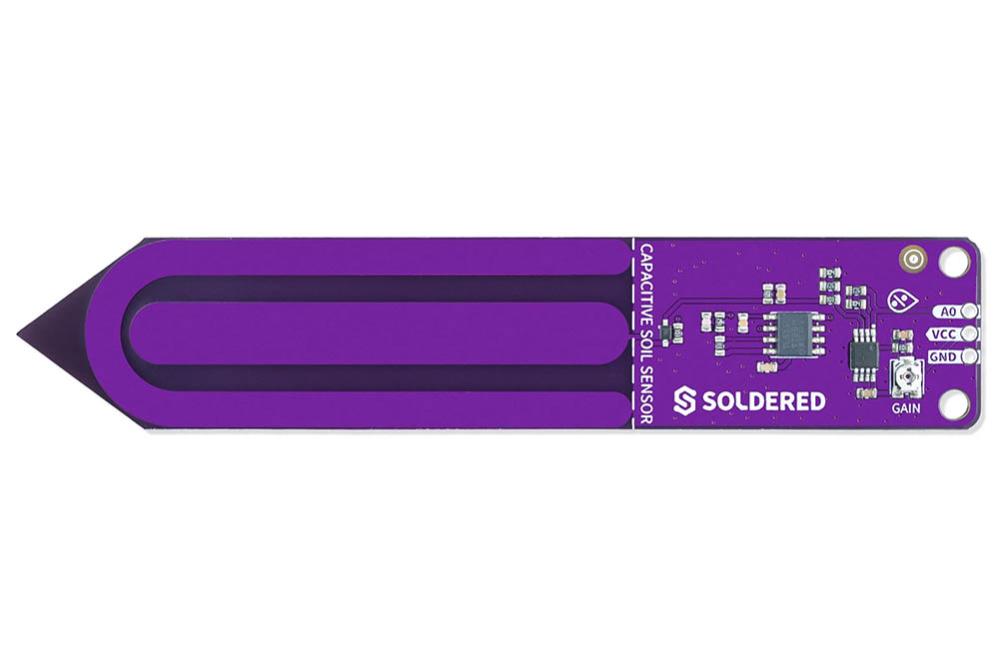
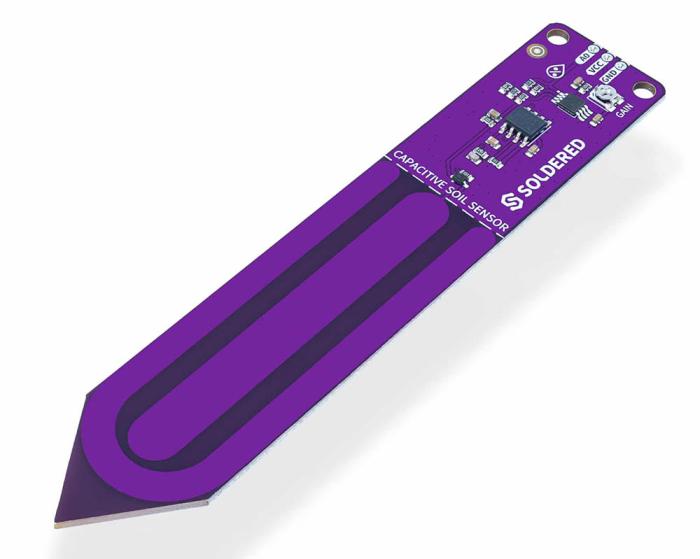
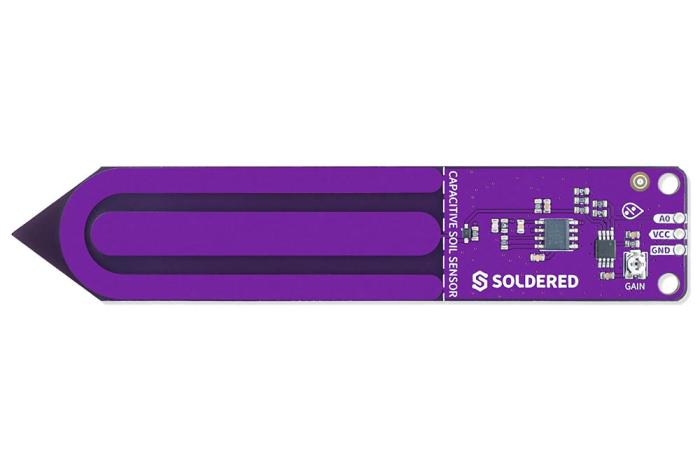
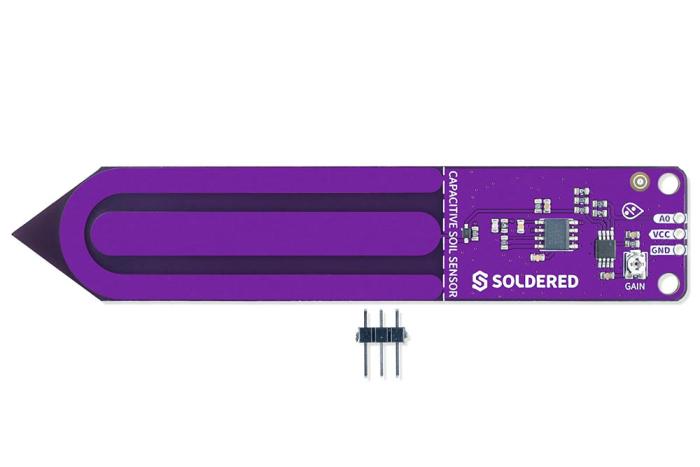
Capacitive Soil Moisture Sensor. How many times have you watered your plants and wondered whether you gave them too much water? With a capacitive soil moisture sensor, you no longer have to worry about that.
Most inexpensive soil moisture sensors use the resistive measurement principle, where two electrodes measure the electrical conductivity of the soil. They work well at first, but the exposed metal surfaces oxidize over time. Oxidation increases the resistance, making it necessary to recalibrate the sensor regularly. In addition, resistive measurement is not always reliable in loose soil.
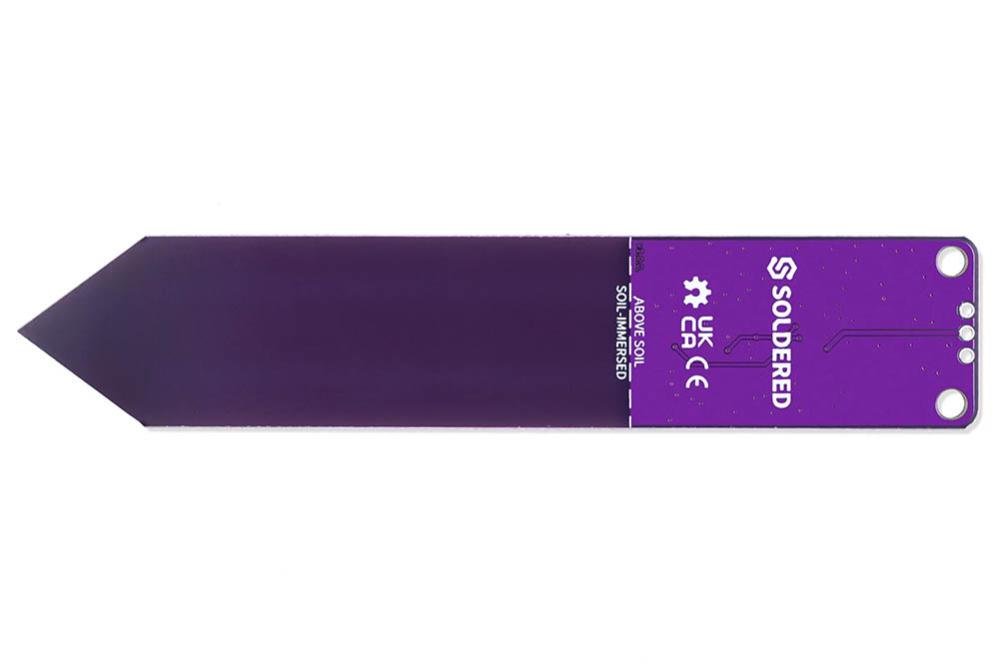
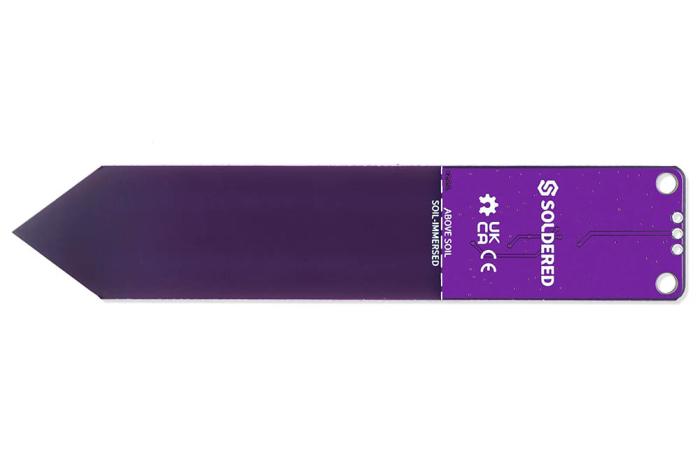
The capacitive measurement principle is a better alternative. The sensor uses a single sensing plate with no exposed metal surfaces and does not pass direct current through the soil or the plant roots. This provides a longer service life, more stable measurements, and reduces the need for recalibration.
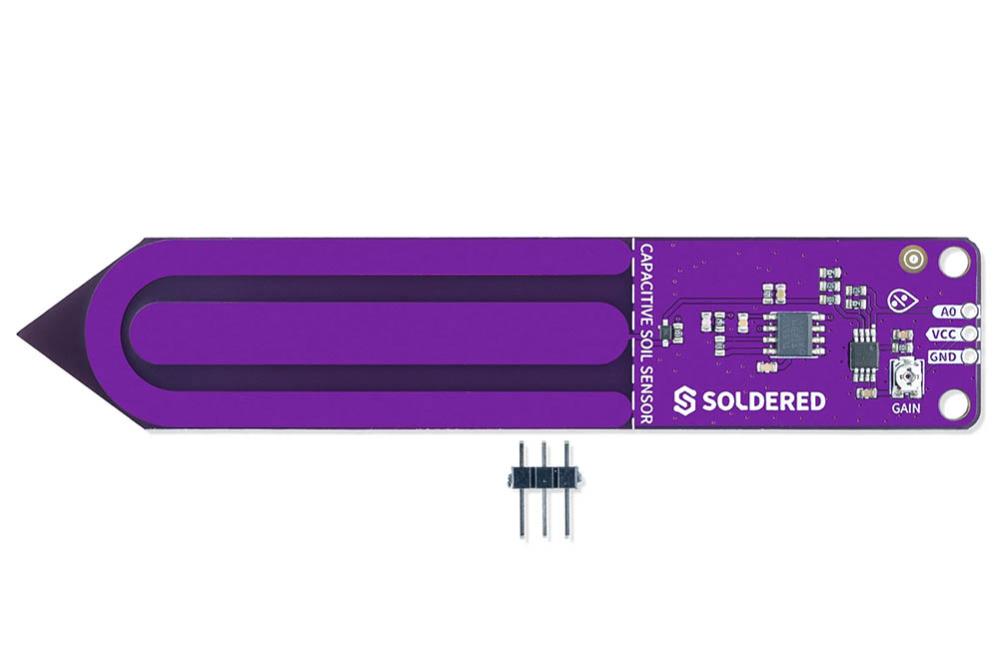
Suitable for measuring soil moisture in irrigation systems, greenhouses, and other cultivation projects. The sensor provides an analog output signal that can be read via the analog input of a microcontroller such as Arduino, ESP32, or Raspberry Pi.
The sensor is based on the TLC555CD, a CMOS version of the well-known 555 timer from Texas Instruments, together with an operational amplifier. The circuit generates a signal whose frequency changes depending on the capacitance of the soil. As the soil moisture increases, the capacitance of the sensing area also increases, changing the frequency or voltage of the sensor output.
Specifications:
- Type: Soil moisture sensor
- Measurement principle: Capacitive
- Output signal: Analog
- Adjustable gain: Yes
- Supply voltage: 3.3–5.5 V
- Compatibility: Arduino, ESP32, Raspberry Pi
- Dimensions: 109 × 22 mm
- Mounting: 2 mounting holes
- Protection: Conformal-coated PCB for increased corrosion resistance