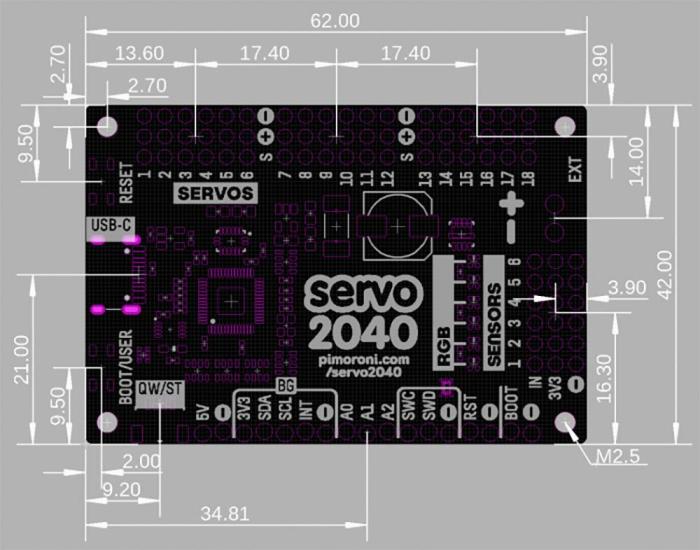
Product description
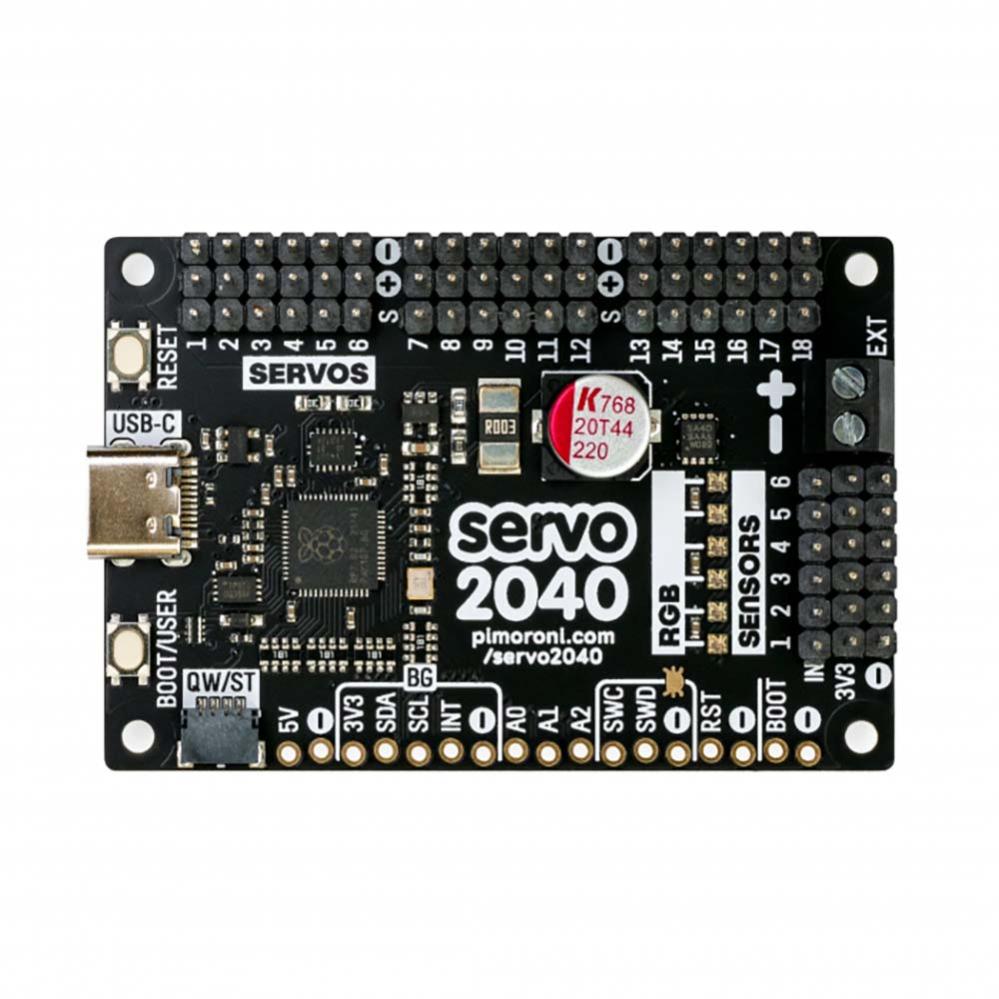
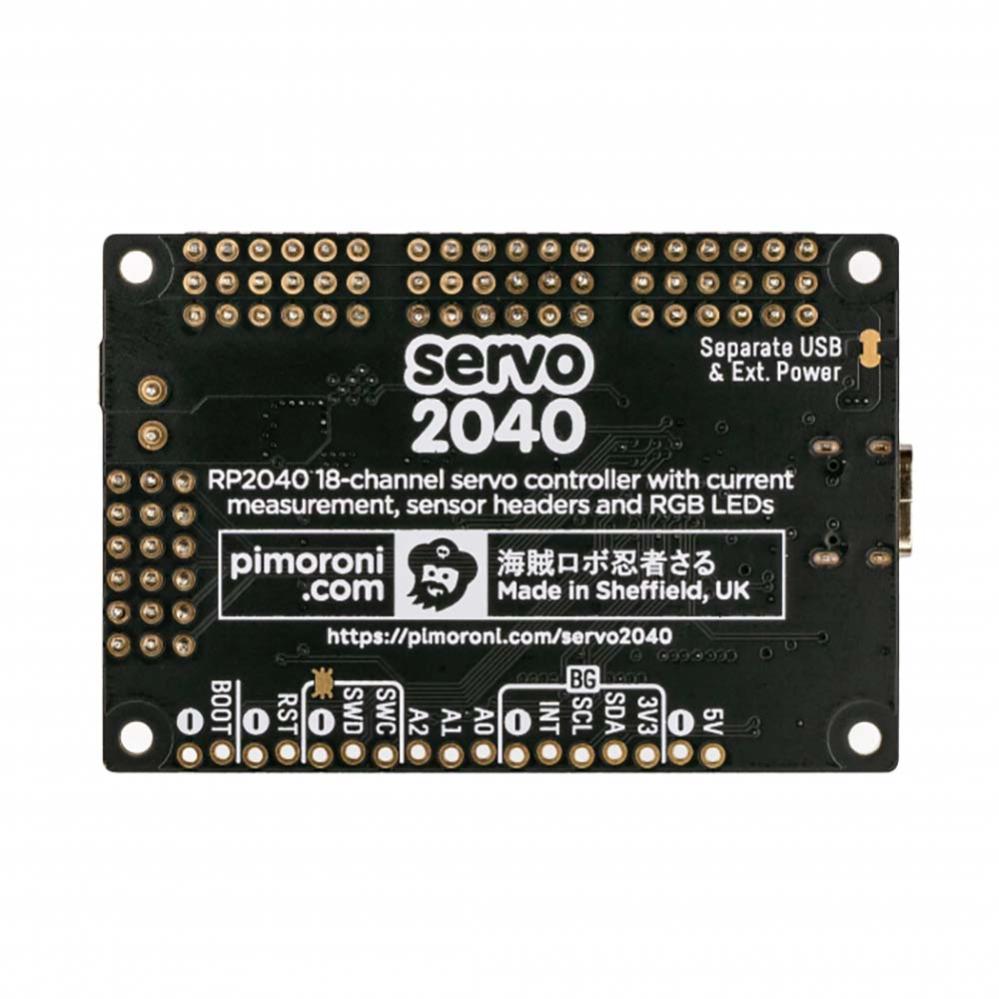
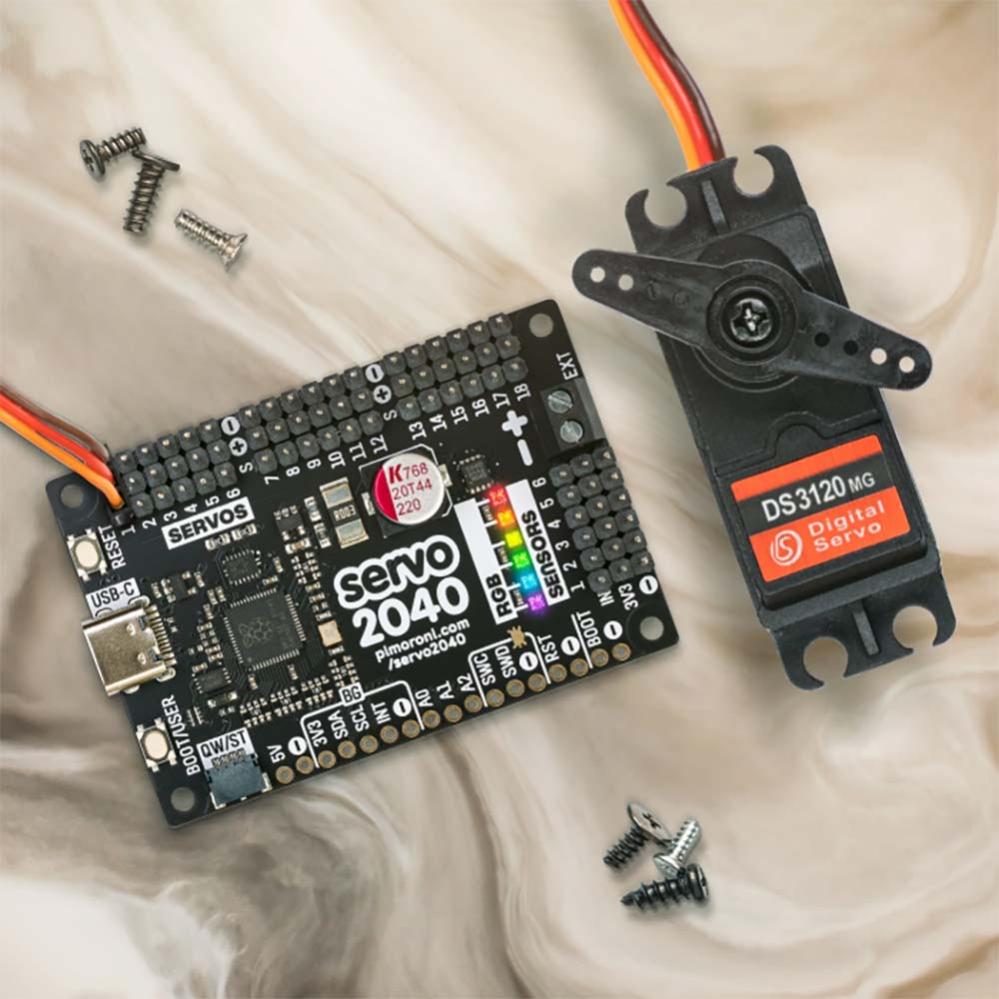
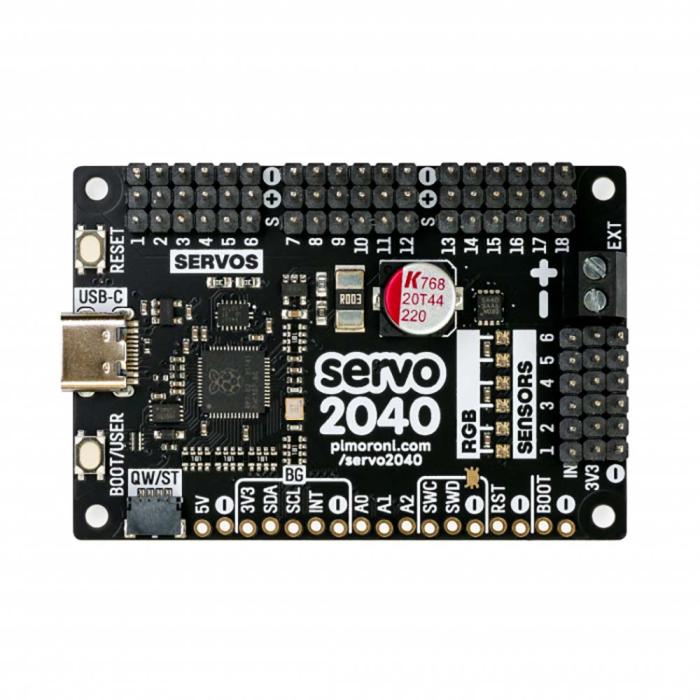
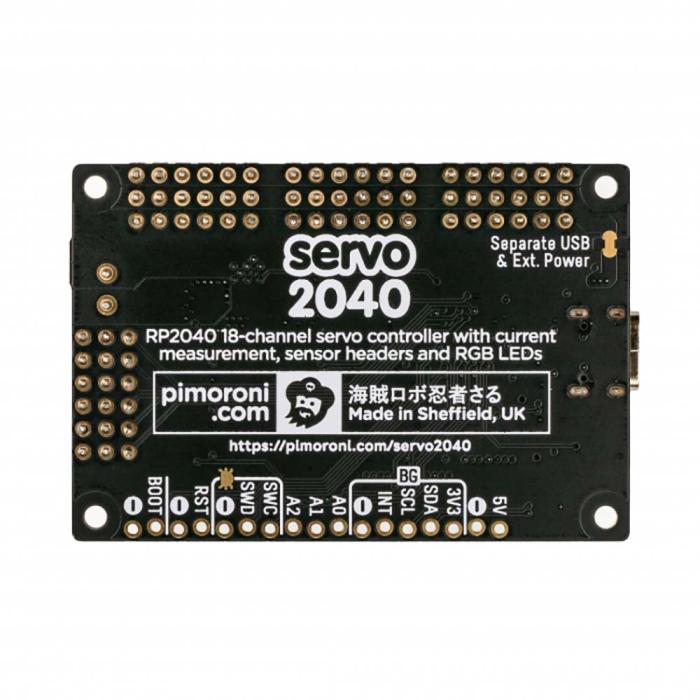
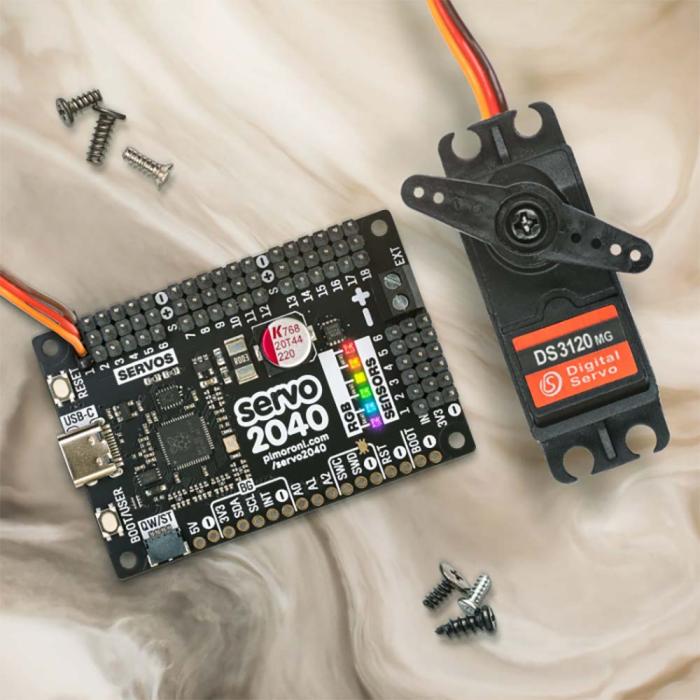
Servo 2040 is a Raspberry Pi RP2040-based servo controller for up to 18 RC servos. The board features a built-in RP2040 microcontroller and can be programmed using C/C++, MicroPython, or CircuitPython. It supports current and voltage monitoring, analog sensors, RGB LEDs, and includes a Qwiic connector. Supplied fully assembled with no soldering required. Servo 2040 is a standalone servo controller with a large number of outputs. With headers for 18 servos, it is suitable for building robots and other projects with many moving parts. Create a centipede, tentacles, abstract kinetic art, optical telegraphs, or other creative projects. Since 18 servos can draw significant current, the board includes smart current handling and monitoring features. Six addressable RGB LEDs can be programmed to display status information or decorative lighting effects. Six headers for analog sensors allow integration of distance sensors, light sensors, and other robotics-related inputs. The Qwiic connector makes it easy to connect a wide range of compatible sensors and expansion boards. Libraries for C++ and MicroPython with extensive examples and documentation help you get started with both small and advanced projects.
Specifications:
- Product: Servo 2040 – 18 Channel Servo Controller
- Microcontroller: RP2040
- Processor: Dual-core Arm Cortex M0+
- Clock frequency: Up to 133MHz
- RAM: 264kB SRAM
- Flash memory: 2MB QSPI flash
- Number of servo channels: 18
- Servo type: RC servo
- Support for analog inputs: 6
- RGB LEDs: 6 addressable RGB LEDs
- Control interfaces: USB-C, Qwiic
- Programming languages: C/C++, MicroPython, CircuitPython
- Supply voltage via USB: 5V
- External supply voltage for servos: Up to 11V
- USB current (max): 3A
- External current (max): 10A continuous
- Protection: Reverse polarity protection
- Features: Current and voltage monitoring, PIO-based servo control, BOOT button, reset button
- Connections: Pre-soldered pin headers and screw terminals
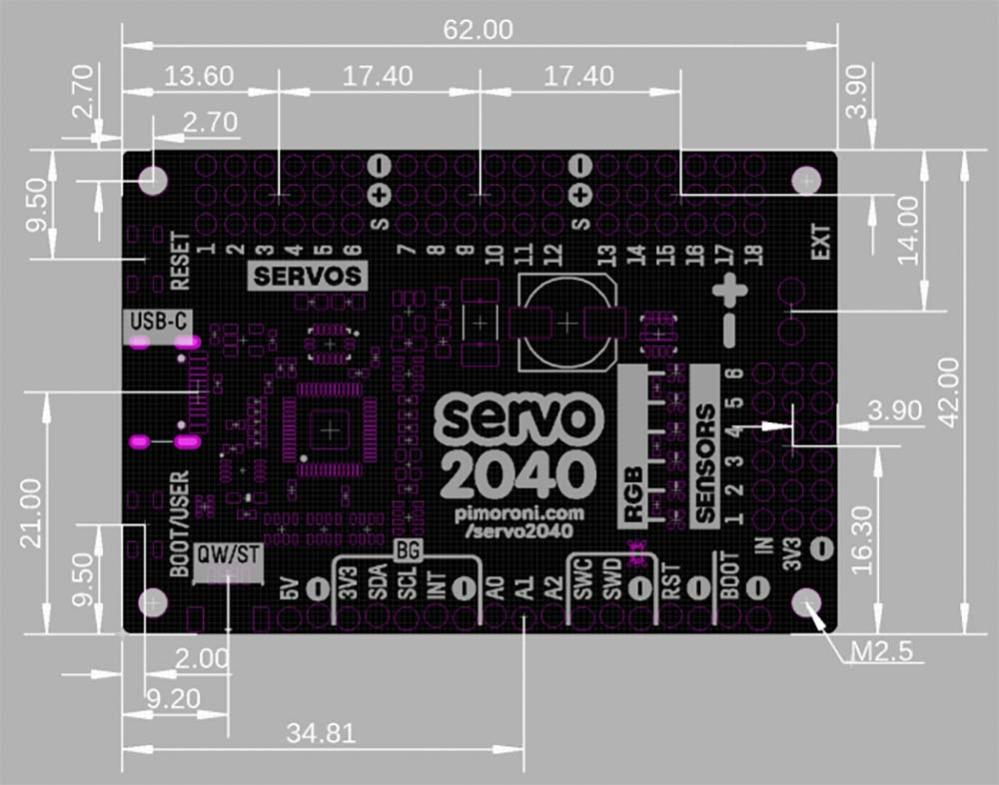
- Dimensions: 62 x 42 x 12mm
- Mounting holes: M2.5
- Software support: C/C++, MicroPython, and CircuitPython
- USB cable: USB-C, not included
- Assembly: Fully assembled, no soldering required