
Product description
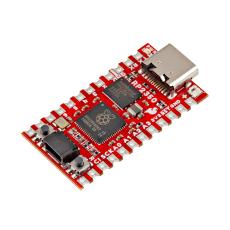
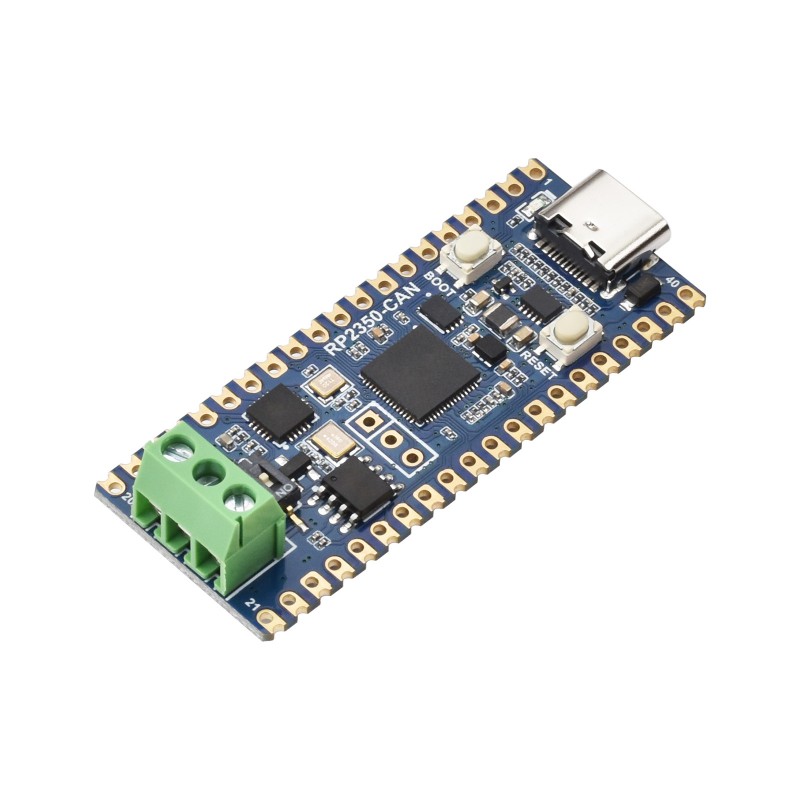
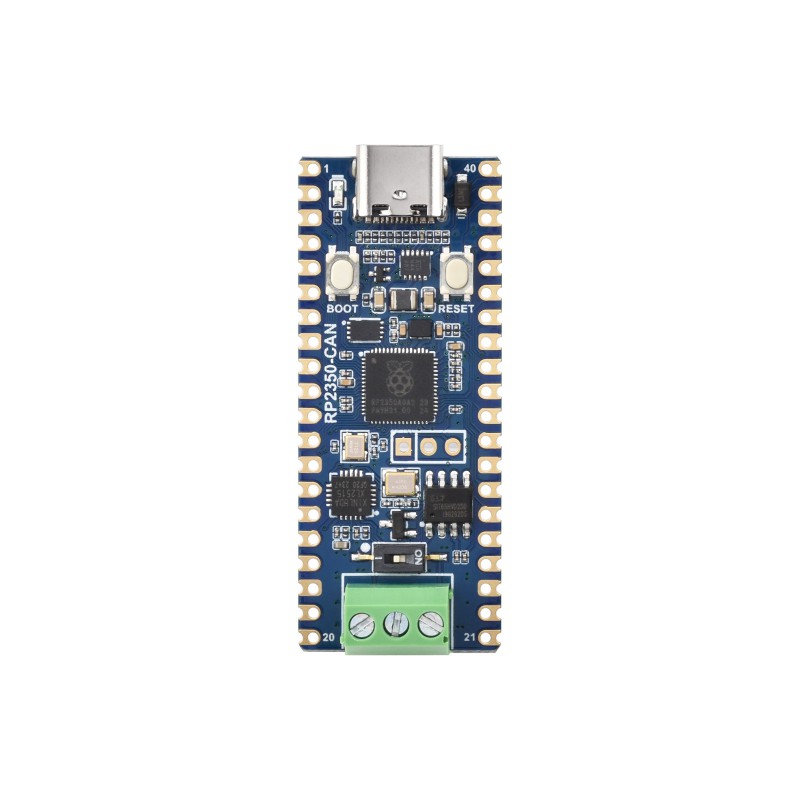
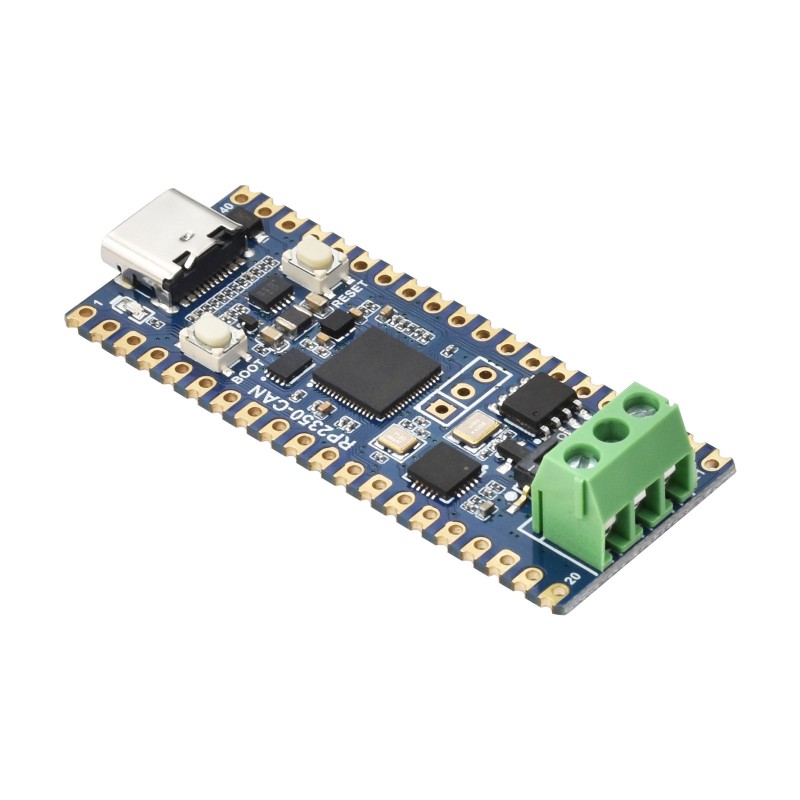
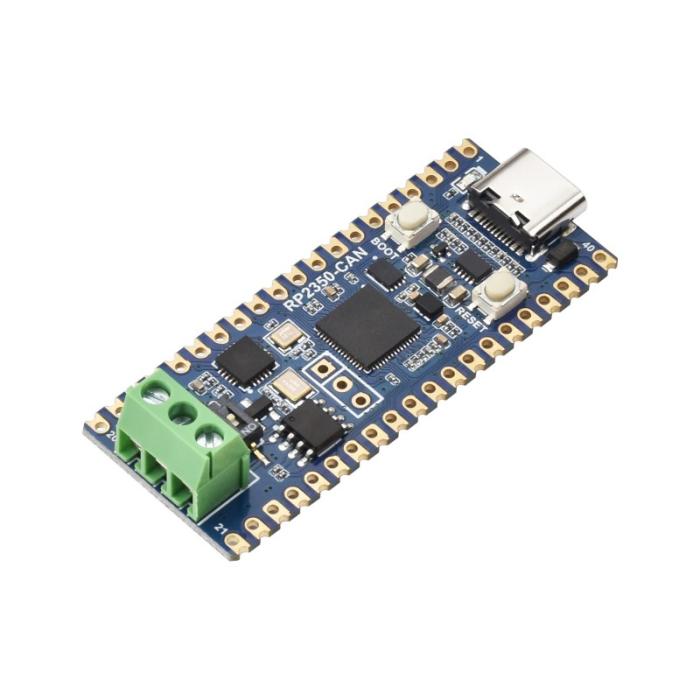
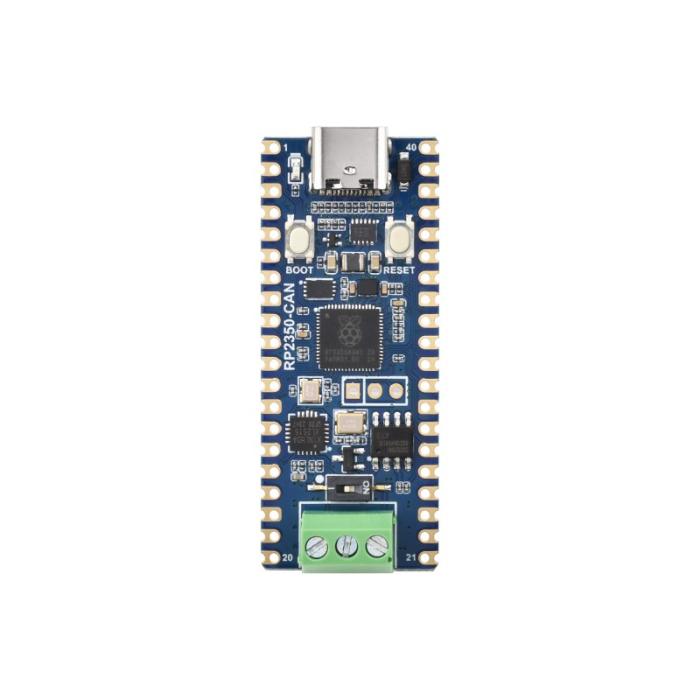
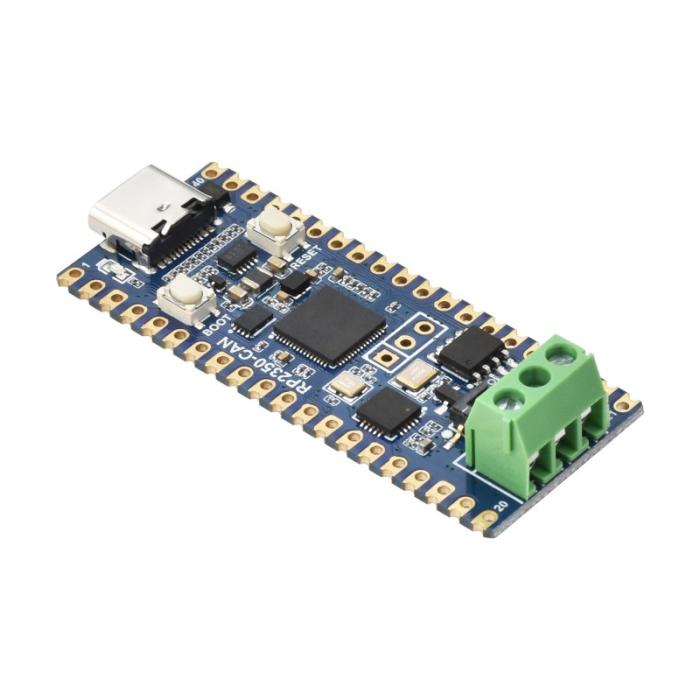
RP2350-CAN is a development board based on Raspberry Pi RP2350A. The board uses the XL2515 and SIT65HVD230 chips for the CAN bus communication. Suitable for applications such as industrial systems, automotive electronics, and distributed applications.
The core features a unique dual-architecture design with both Arm Cortex-M33 and RISC-V Hazard3 cores, providing flexibility during development and the option to choose architecture depending on the application. With an integrated CAN controller and transceiver, the board can be directly connected to a CAN network without external modules.
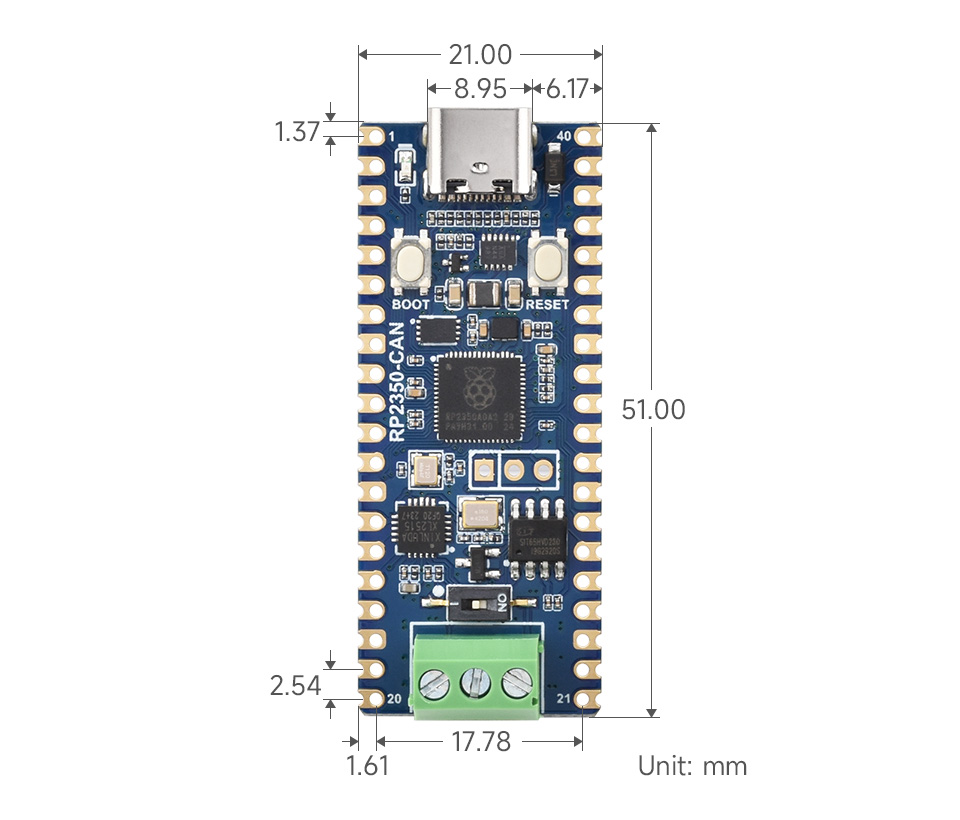
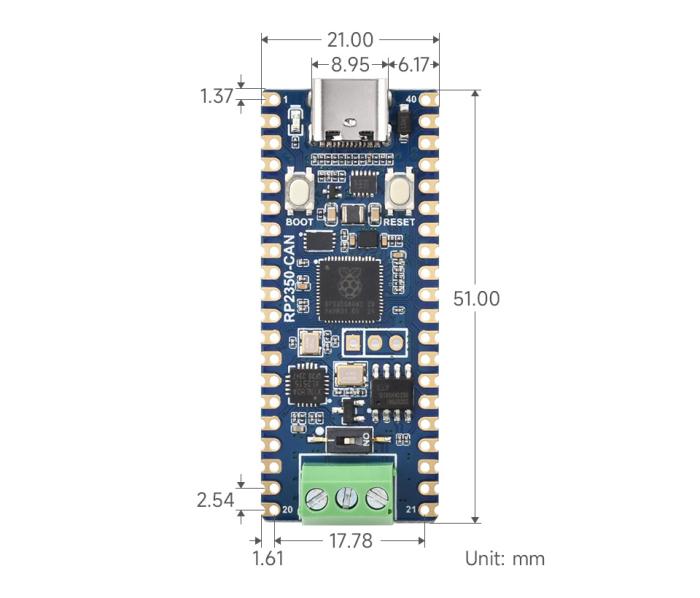
The board has a Pico-like form factor and is designed for easy integration in both prototypes and finished systems. USB-C is used for programming and power supply, and development is supported via C/C++ or MicroPython with extensive SDK and resources.
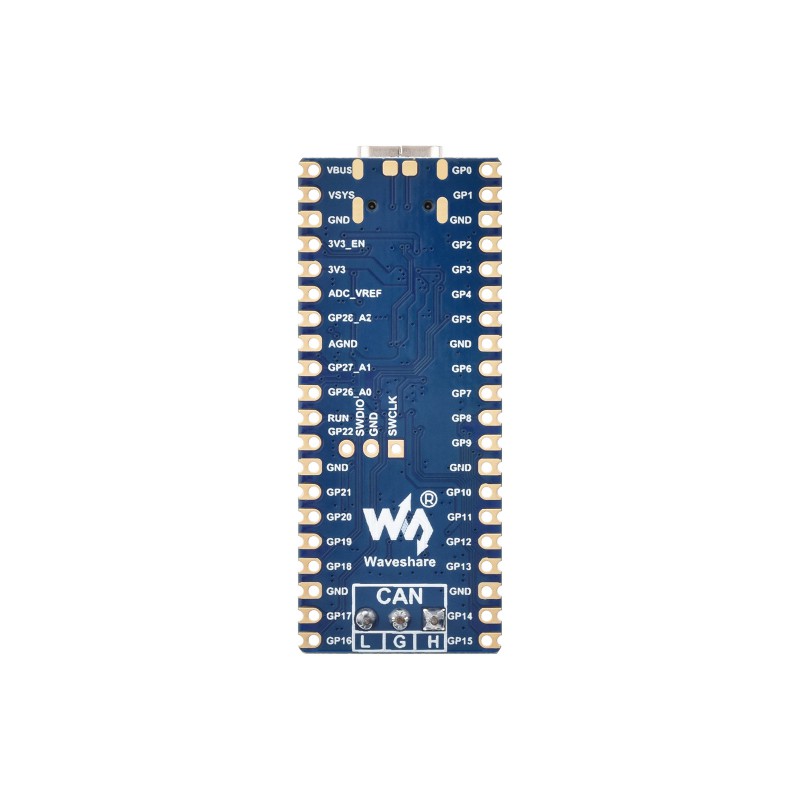
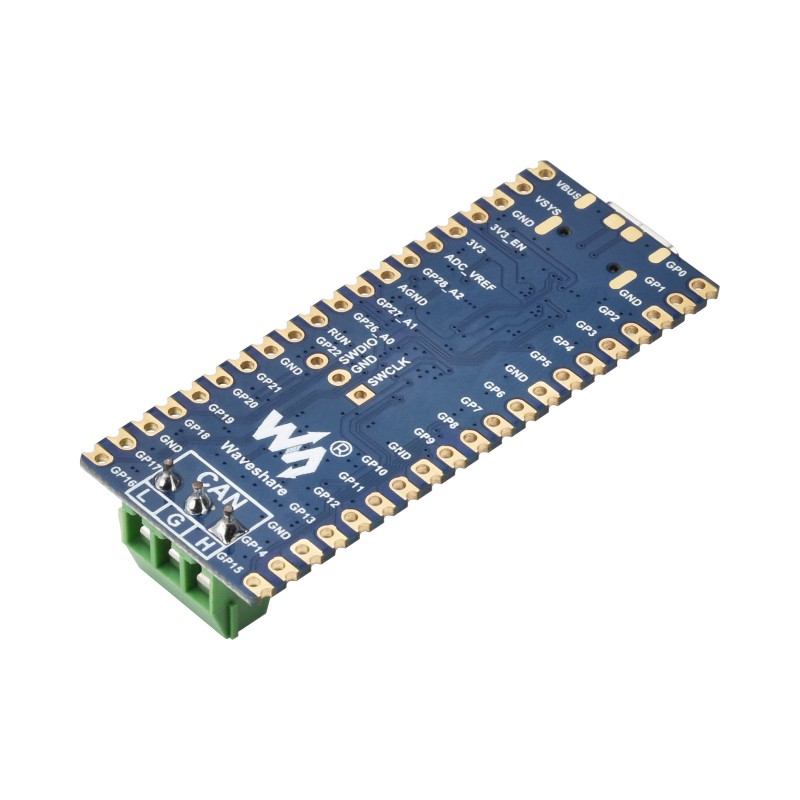
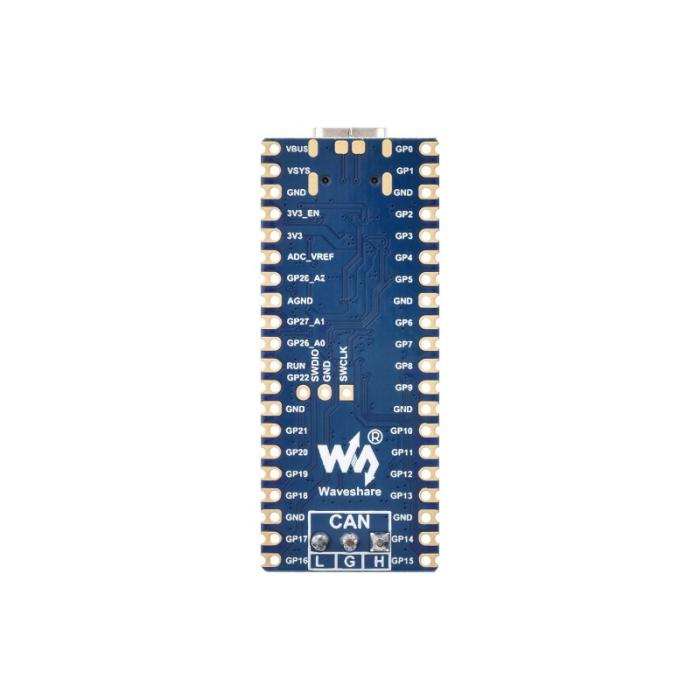
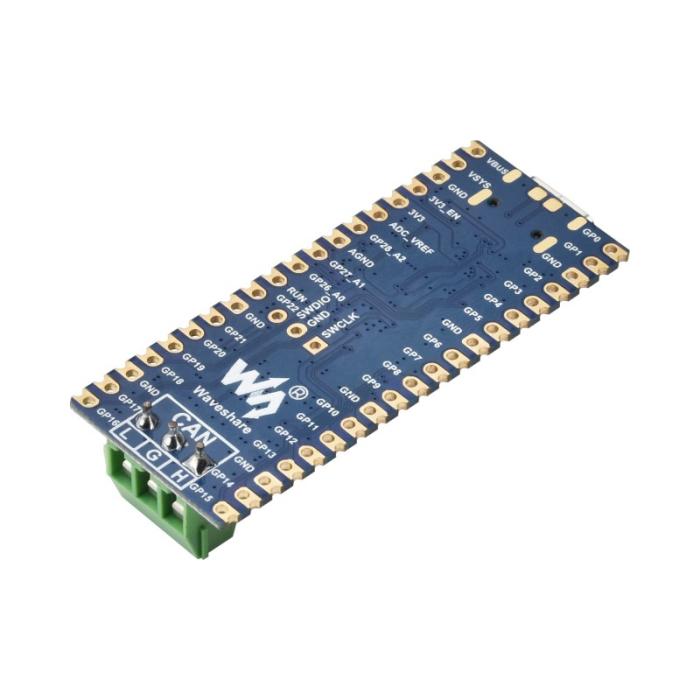
The board features castellated edges, allowing it to be soldered directly onto a custom PCB as an SMD module. Alternatively, pin headers can be installed for use with prototyping boards or breadboards.
Specifications:
- Microcontroller: RP2350A (Raspberry Pi)
- Processor: Dual-core Arm Cortex-M33 + dual-core Hazard3 RISC-V
- Clock frequency: up to 150 MHz
- Memory: 520 KB SRAM
- Flash memory: 4 MB
- CAN controller: XL2515 with CAN 2.0B support
- CAN transceiver: SIT65HVD230 (up to 1 Mbps)
- Connection: USB-C host/device
- GPIO: 26 multifunctional pins
- Interfaces: 2x SPI, 2× I2C, 2x UART
- ADC: 4 channels, 12-bit
- PWM: 16 channels
- PIO: 12 state machines
- Other: temperature sensor, timers, low-power modes
- Form factor: Pico-compatible, solderable module