

Product description
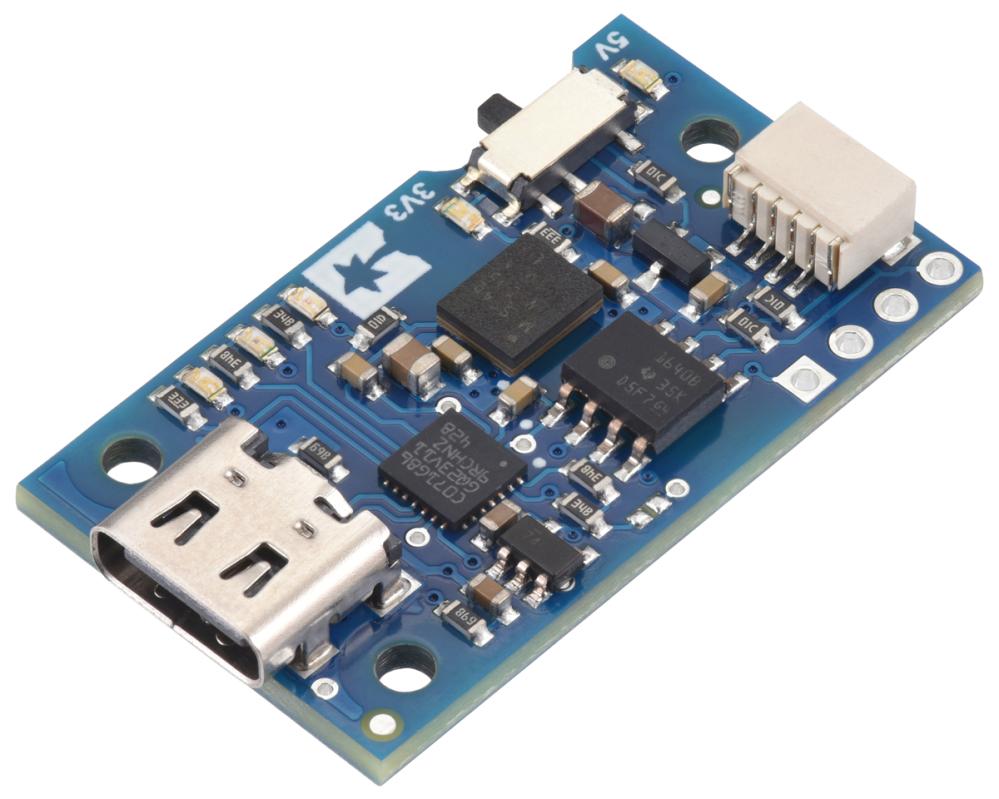
Galvanically isolated USB-to-I²C adapter from Pololu that allows I²C devices to be connected directly to a computer via USB. The adapter acts as a bridge between USB and I²C, allowing the computer to communicate with sensors, microcontrollers and other I²C devices to read and write data.
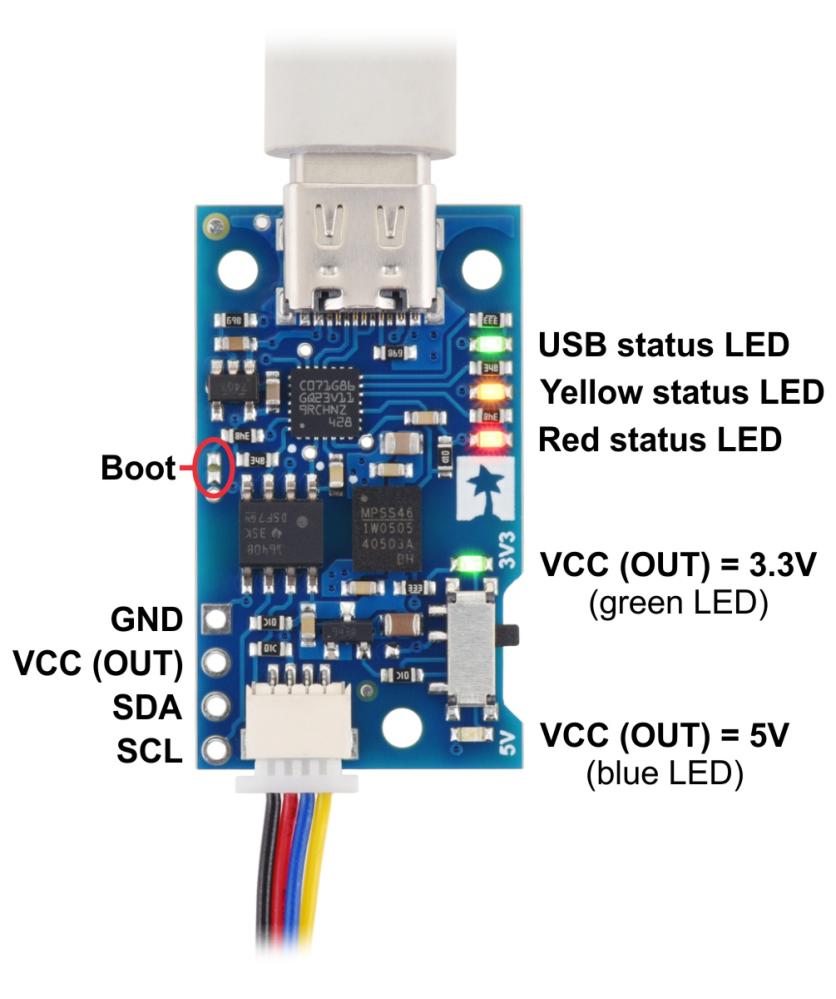
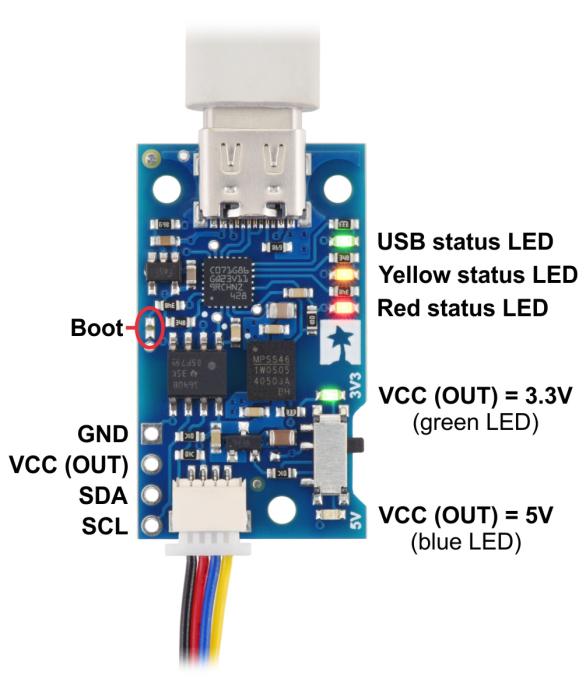
The adapter provides full galvanic isolation between the USB and I²C sides. This prevents unwanted currents from flowing between the two systems and protects the computer's USB port against potentially damaging voltages on the I²C bus. The isolated side can also supply connected I²C devices with 3.3 V or 5 V at up to 200 mA. The output voltage is selected using a switch on the board.
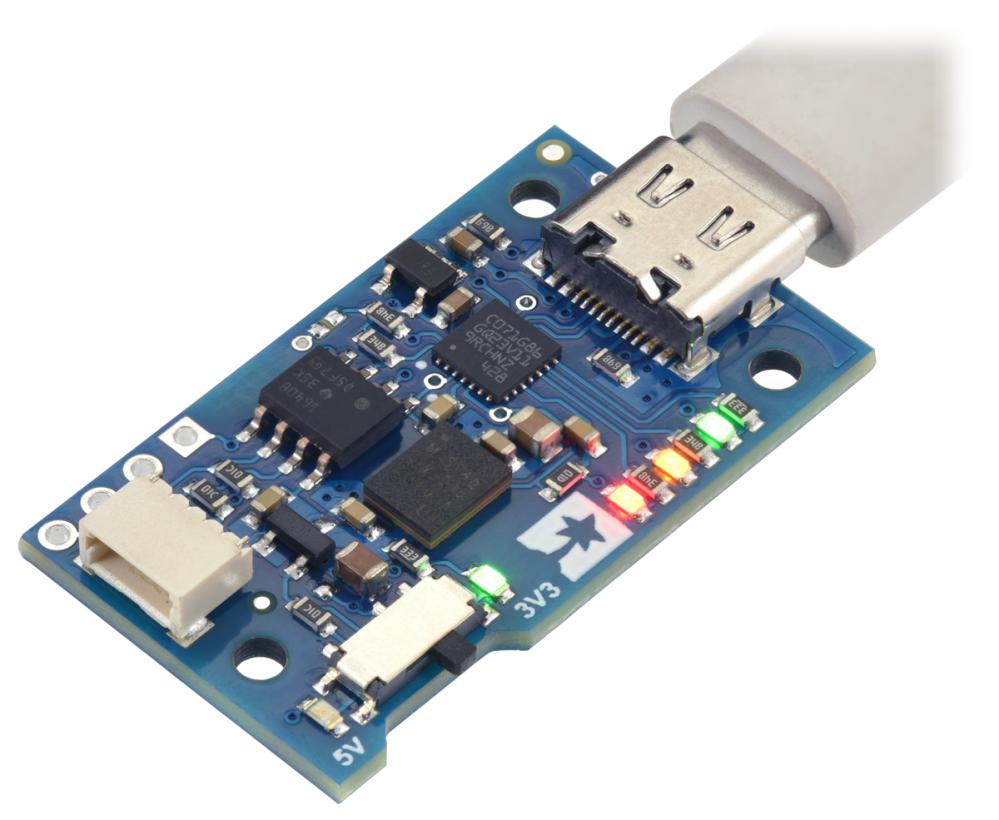
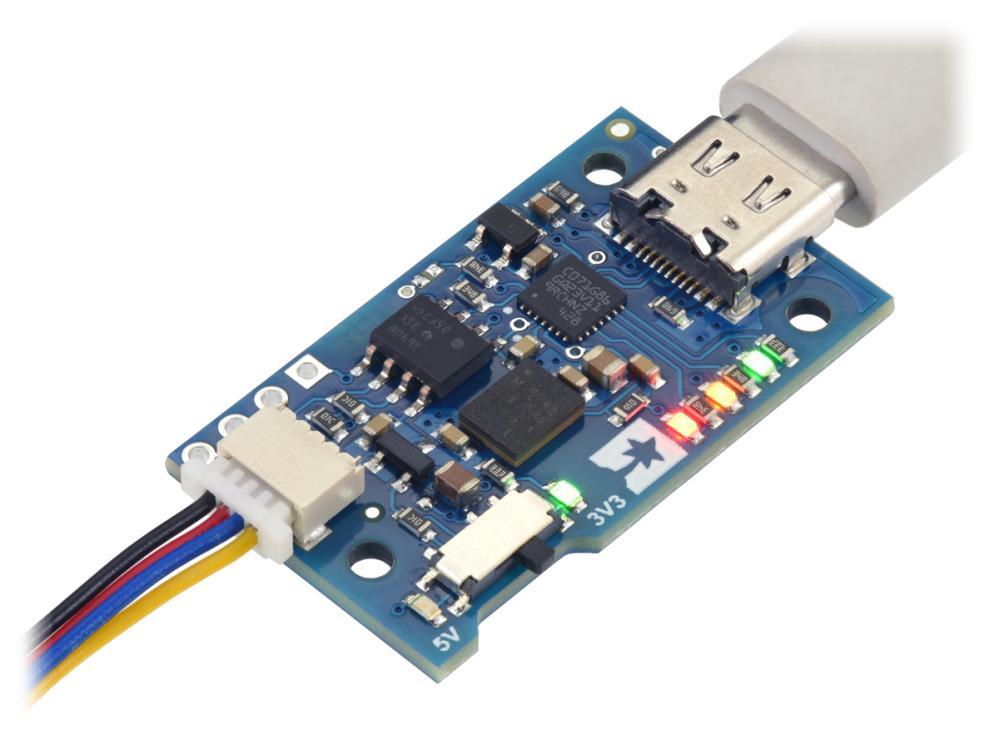
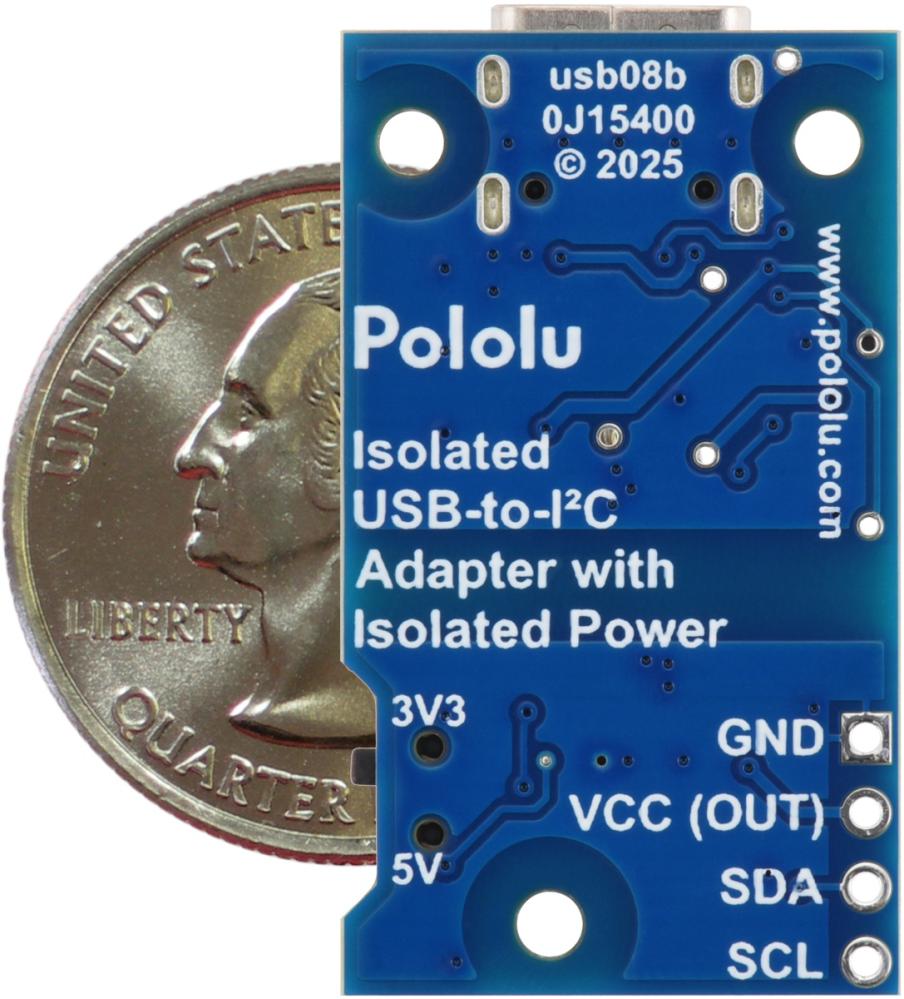
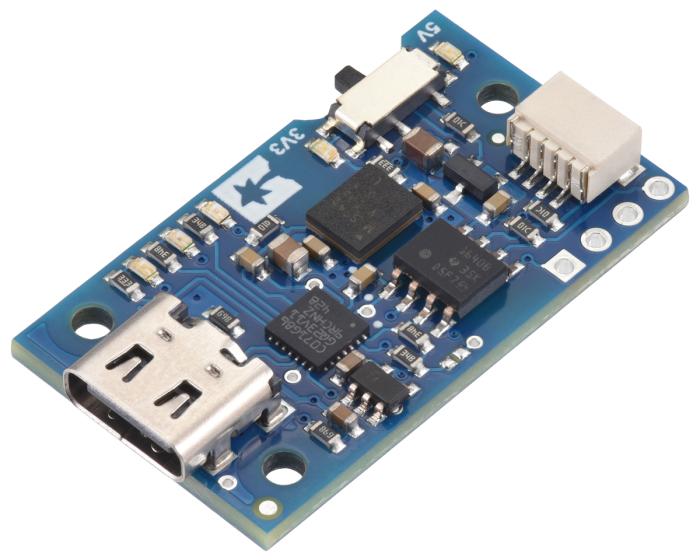
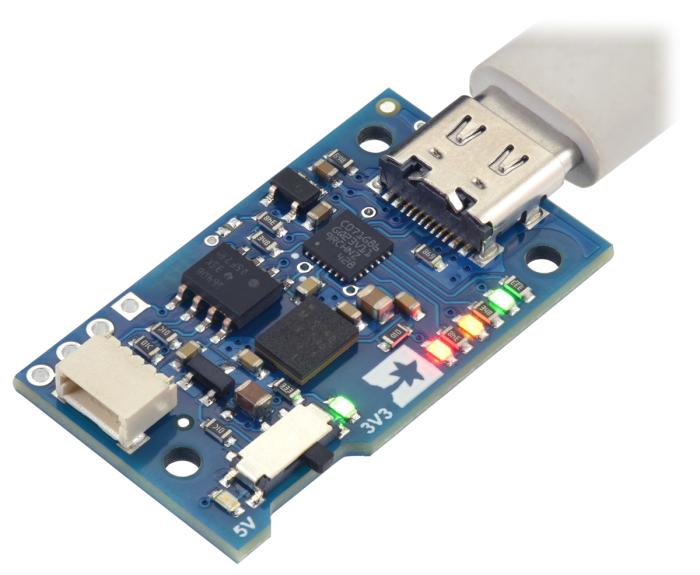
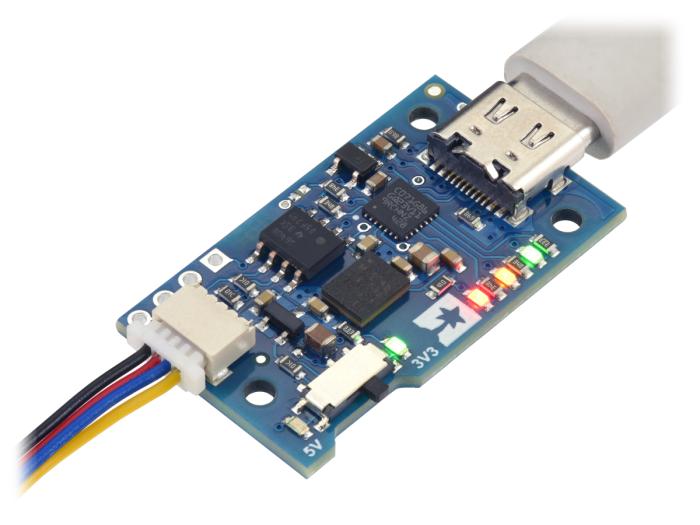
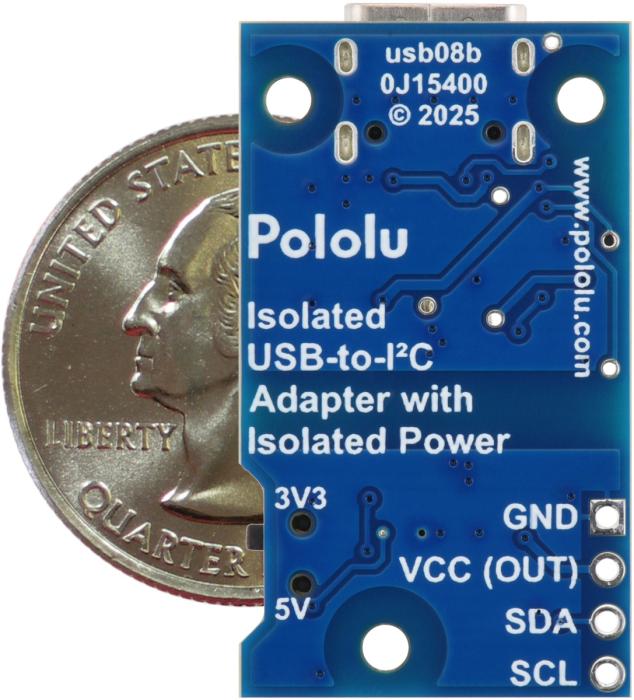
The adapter supports bidirectional I²C communication, clock stretching and clock frequencies above 1 MHz. Connection to the computer is via USB-C, while the I²C bus is connected through a Qwiic connector. I²C signals are also accessible through holes for pin headers.
On the USB side, the adapter is recognized as a virtual serial port (CDC ACM) and works with Windows 10 and later, Linux and macOS without requiring separate drivers. Communication is possible from any programming environment that supports binary data transfer over a serial port. Pololu also provides a Python library and open-source firmware for the adapter.
Specifications:
- Manufacturer: Pololu
- Part number: 5397
- Type: Galvanically isolated USB-to-I²C adapter
- USB connector: USB-C
- USB interface: Virtual serial port (CDC ACM)
- I²C speed: Over 1 MHz
- Clock stretching: Yes
- Galvanic isolation: Between USB and I²C sides
- Isolated output voltage: 3.3 V or 5 V, selectable
- Output current (max): 200 mA
- I²C connection: Qwiic connector or through-holes for pin headers, 2.54 mm pitch
- Compatible operating systems: Windows 10 and later, Linux, macOS
- Microcontroller: STM32C071G8
- Programming support: Python library and documented serial protocol
- Firmware: Open source
- Pin headers: Not included